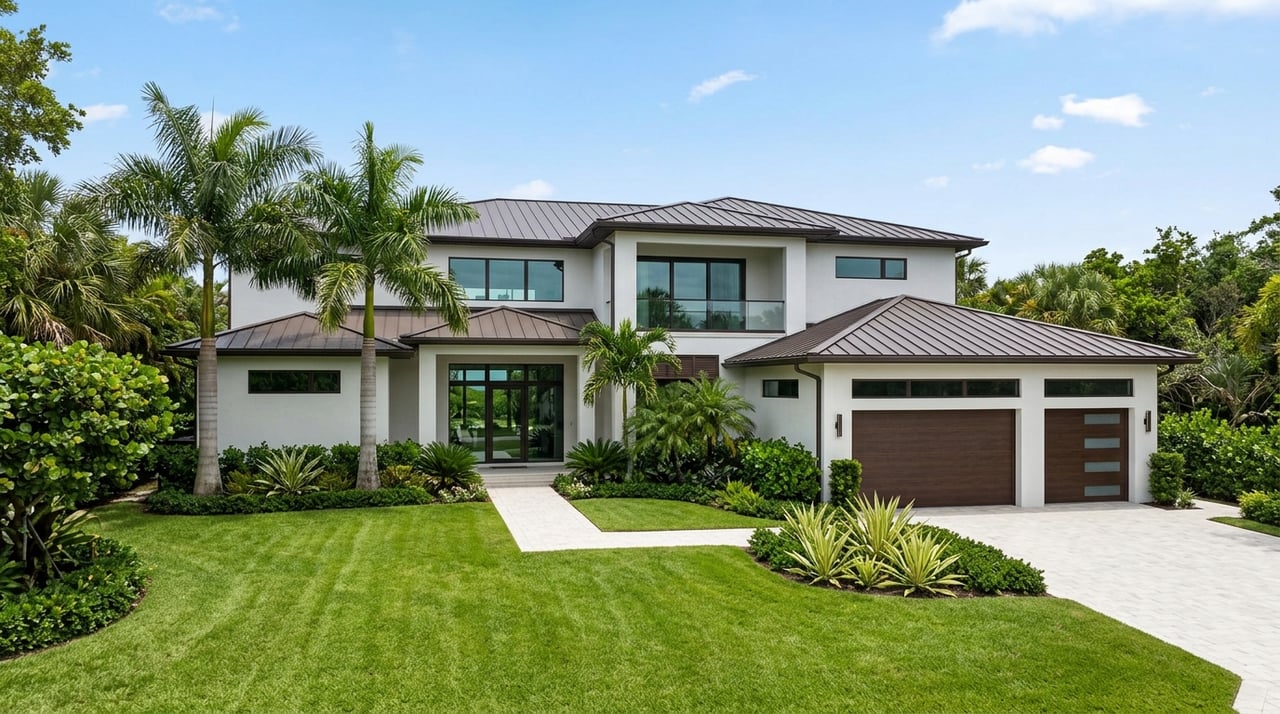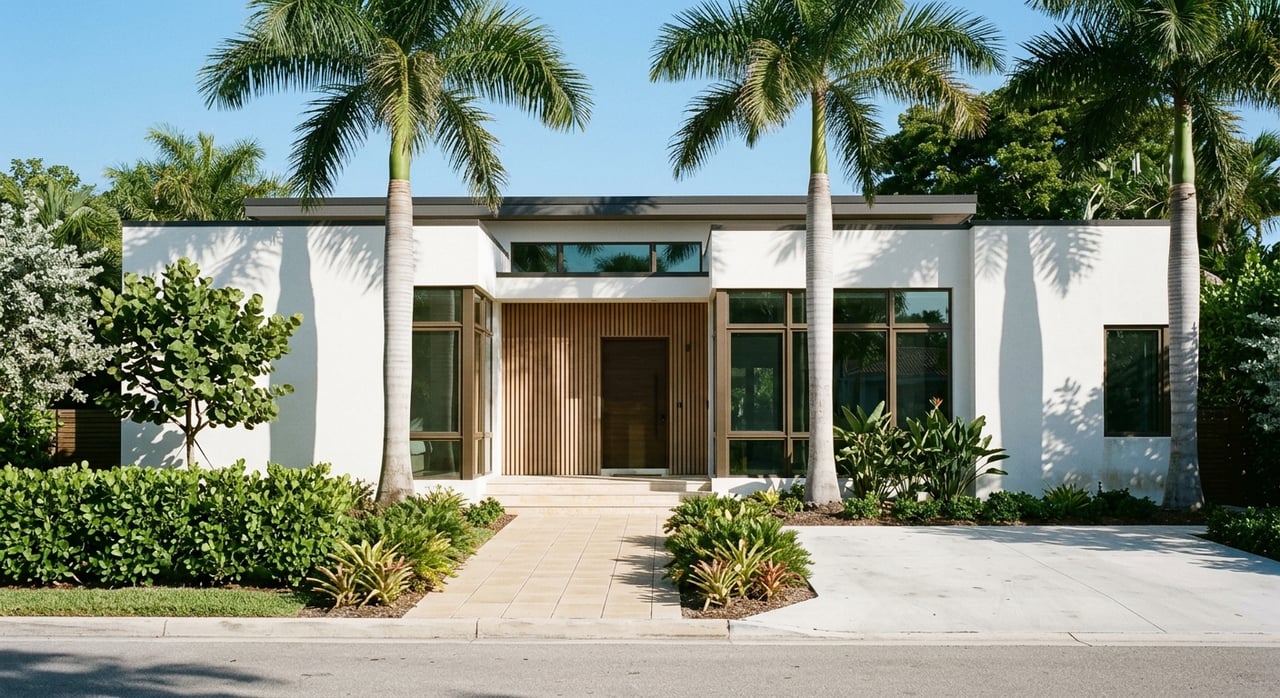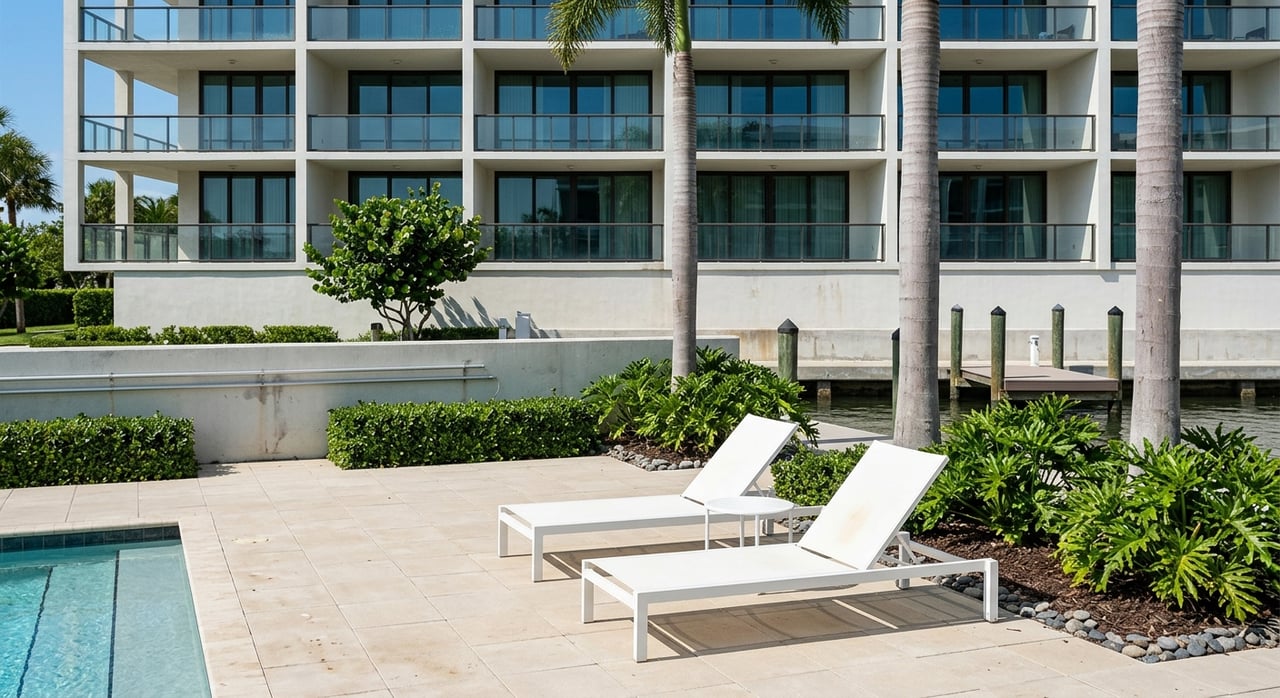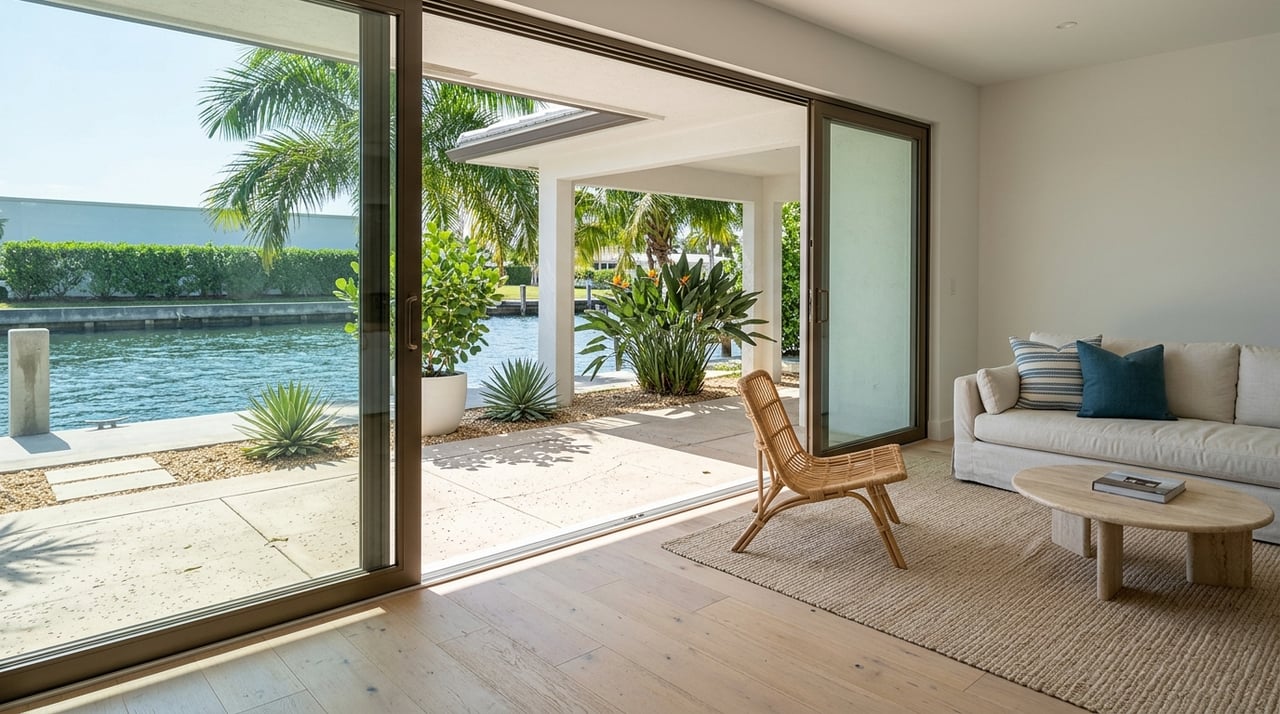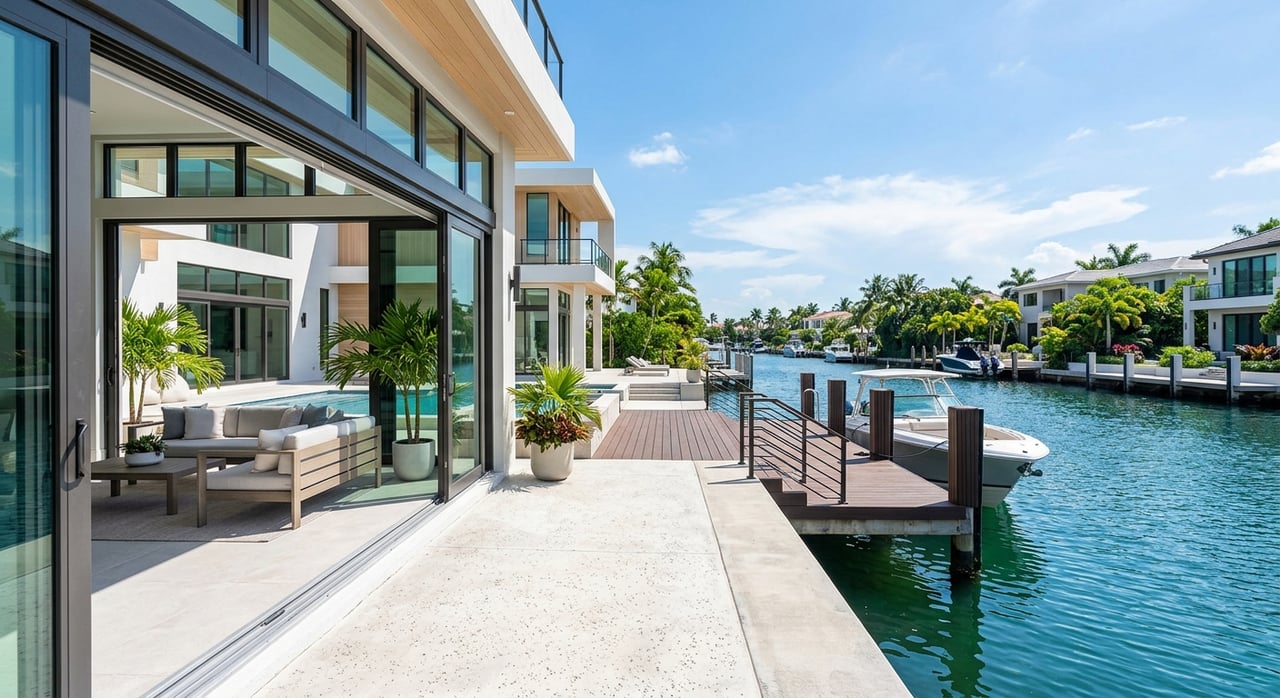
If you picture boating in Lighthouse Point as a straight shot from your dock to the ocean, you are only getting part of the story. This city is built around canals, fixed bridges, and protected-water routes, so the way a waterfront home works for your boat matters just as much as the home itself. If you are thinking about buying or selling here, understanding the route, the limits, and the dock details can save you time and costly surprises. Let’s dive in.
Lighthouse Point Is Built Around Canals
Lighthouse Point is a true canal-first city. According to the city, about 80% of residences are single-family homes, and many sit along 18 miles of waterways. The canal system is man-made and bulkheaded, with the Intracoastal Waterway running the full length of the city.
That setup gives the city a very different feel from a beachfront market. In Lighthouse Point, boating is tied closely to neighborhood waterways and private dockage rather than beach access or open shoreline. For many buyers, that is exactly the appeal.
How Boating Access Works Day to Day
For most canal homes in Lighthouse Point, the path to open water follows a simple sequence. You leave your dock, move through the canal, reach the Intracoastal Waterway, continue to Hillsboro Inlet, and then head out to open water.
The city says the Intracoastal connects to the canal system at several points, and NOAA describes the Intracoastal Waterway as a protected route for small boats. In real life, that means many homeowners enjoy a boating lifestyle centered on calm neighborhood water and relatively direct access outward.
Protected-Water Boating Is the Big Draw
This is one of the main reasons Lighthouse Point stands out for boaters. It behaves more like a protected-water boating neighborhood than a beachfront boating district. If you want the convenience of keeping your boat behind your house and cruising through sheltered waterways before reaching the inlet, this setup can be a strong fit.
That also shapes the kind of buyer who tends to love the area. Many are looking for easy dock access, practical day-to-day boating, and the ability to enjoy the water without keeping a boat in a separate marina.
The Inlet Still Requires Caution
A short route on a map does not mean a no-stress run every time. NOAA notes that Hillsboro Inlet has submerged jetties, reported current shifts on flood and ebb, and reported shoaling.
In plain terms, the route can be convenient, but normal inlet awareness still matters. Weather, tide, current, and channel conditions all affect how that final leg feels once you leave the Intracoastal.
Bridges and Canal Width Matter Most
When buyers look at Lighthouse Point canal homes, they often focus first on dock length. That matters, but it is only part of the picture. In many cases, the more important questions are whether your boat can clear the bridges and whether the canal gives you enough room to maneuver comfortably.
The city’s dredging specifications offer a useful look at how these waterways function. For municipal maintenance work, the city requires dredging to a depth of -5.0 feet below mean low water and a typical channel bottom width of 40 feet, with no excavation closer than 20 feet from any seawall or fixed bridge.
Why Air Draft Can Be a Deal Breaker
The city’s infrastructure materials list several bridge crossings over neighborhood waterways, including crossings at Sample Road, NE 31st Court, NE 28th Street over Pelican Waterway, NE 29th Street over Tern Waterway, NE 24th Avenue over Alamanda Waterway, NE 49th Street over Egret Waterway, and NE 48th Street over Coral Key Waterway.
That tells you something important about boating in Lighthouse Point. This is not a market defined by regular bridge-opening schedules. It is a market where fixed-span clearance can shape what kind of boat works at a given property.
If your vessel has a tall profile, bridge clearance may narrow your options quickly. A home with beautiful dockage can still be the wrong fit if the route out limits your air draft.
Beam and Turning Room Count Too
Canal boating is not just about getting out. It is also about how easy it is to back in, turn around, and move confidently on a daily basis. On narrower or dead-end waterways, beam and turning room can matter just as much as length.
That is why two waterfront homes in the same city can function very differently for boaters. One may sit on a broader, more central canal with easier movement, while another may work better for a smaller or lower-profile vessel.
Not Every Canal Home Lives the Same
Lighthouse Point is almost totally developed, which means most waterfront opportunities are resale homes in established neighborhoods. That can be a major plus if you want a mature waterfront setting, but it also means each property has to be judged on its own boating practicality.
The city has maintained and dredged a range of named canal corridors, including Coral Key, Canale della Paula, Canale della Torre, Canale della Chiesa, Pelican, Alamanda, Kingfisher, North Grand, Ibis, Tern, and Egret. From a buyer’s perspective, that supports a simple reality: not all canal locations offer the same boating experience.
Central Routes vs. Smaller Canals
Some homes sit on broader or more central routes that may feel easier for regular boating use. Others sit on smaller canals or dead-end stretches where clearance and maneuverability become more important.
That does not make one automatically better than the other. It simply means you should match the property to the boat and to how you actually plan to use it. Weekend cruising, fishing runs, and larger-vessel ownership can all point to different priorities.
Dock Planning Should Happen Early
If you are buying a canal home, dock questions should come up before closing, not after. Lighthouse Point’s permitting process makes that clear.
According to the city’s FAQ, a re-deck or dock permit requires approval from the Florida Department of Environmental Protection, a city building application, signed and sealed drawings for a new dock, and survey copies showing the dock dimensions. If the survey is more than 12 months old, the city requires a zoning affidavit or a new survey.
What Buyers Should Review
Before you commit to a property, it helps to review a few practical items:
- Current dock layout and usable dockage
- Canal location and route to the Intracoastal
- Fixed bridges along the likely boating path
- Approximate room for turning and maneuvering
- Survey age and whether updated documents may be needed
- Whether you may want to re-deck, replace, or modify the dock later
These details can affect both your day-one use and your future improvement plans. A waterfront purchase usually works best when the house and the boating setup make sense together.
What Type of Boater Lighthouse Point Fits Best
For many buyers, Lighthouse Point is a strong match because it offers private-dock living and a protected-water feel with access to the Intracoastal and Hillsboro Inlet. If your goal is to keep your boat at home and enjoy convenient neighborhood water access, the city checks a lot of boxes.
At the same time, buyers with tall-air-draft boats or oversized vessels should look carefully at bridge clearance, width, and turning space. Based on the city’s fixed-bridge conditions, channel dimensions, and dock-permitting requirements, some homes will clearly work better than others.
Why Local Waterfront Guidance Helps
On paper, many canal homes can look similar. In practice, the boating experience can change from one waterway to the next. That is why local guidance matters in a market like Lighthouse Point.
If you are buying, you want a clear picture of how a property functions beyond the photos. If you are selling, you want your home positioned around the boating details that truly matter to the right buyer. That kind of local context can make the search sharper and the marketing stronger.
When you are ready to make a move in Lighthouse Point, The Coastal Realm can help you evaluate canal access, dock potential, and the real-world fit between the property and your boating lifestyle.
FAQs
How do most Lighthouse Point canal homes reach open water?
- Most routes go from a backyard canal to the Intracoastal Waterway, then to Hillsboro Inlet, and out to open water.
What makes Lighthouse Point different from a beachfront boating area?
- Lighthouse Point is a canal-first city with man-made, bulkheaded waterways and private dockage, so boating is centered on protected neighborhood water routes rather than beach frontage.
Why do fixed bridges matter for Lighthouse Point boat owners?
- Fixed bridges can limit which boats work at a property because air draft may affect whether you can move from the canal system to the Intracoastal comfortably.
Are all Lighthouse Point canal homes equally easy to use for boating?
- No. Canal width, bridge clearance, turning room, and whether a home sits on a central or smaller waterway can all change the day-to-day boating experience.
What should buyers know about dock permits in Lighthouse Point?
- The city says dock work may require Florida Department of Environmental Protection approval, a city building application, signed and sealed drawings for a new dock, and survey documents showing dock dimensions.
Is Lighthouse Point a good fit for large or tall boats?
- It can be, but buyers should review bridge clearance, canal width, and turning room carefully because some properties may be less practical for tall-air-draft or oversized vessels.